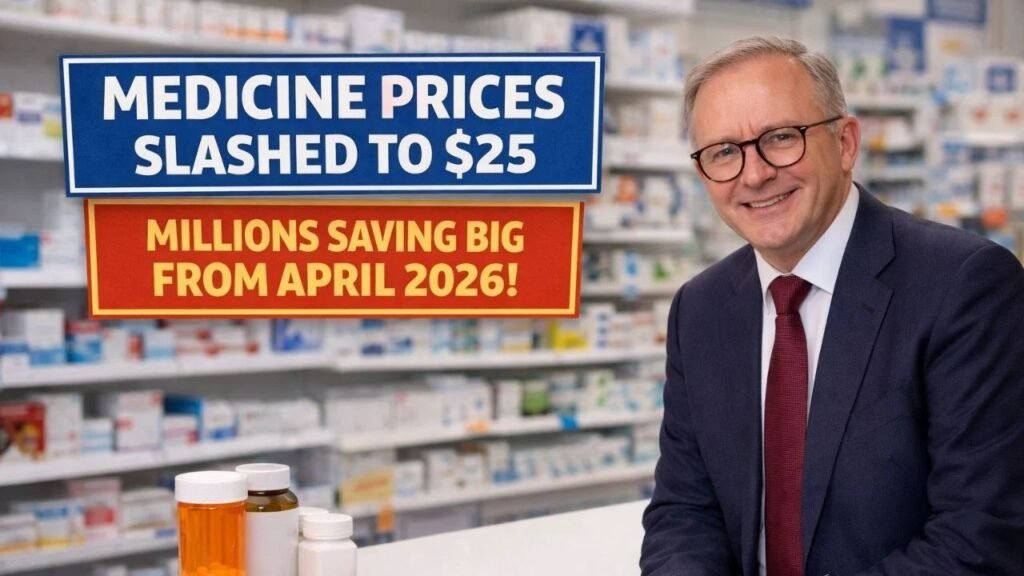
Healthcare costs have long been a source of financial pressure for Australians, particularly for those managing chronic conditions or multiple prescriptions. In 2026, a groundbreaking reform brings welcome relief: the Pharmaceutical Benefits Scheme (PBS) has capped the cost of medicines at $25 per prescription for general patients. This change is set to ease the financial burden on millions nationwide and improve access to essential healthcare.
What’s Changing From April 2026
From April 2026, PBS-listed medicines will have a maximum cost of $25 per prescription. Key details include:
- $25 cap for general patients – Automatically applied at pharmacies
- Lower costs for concession card holders – Ensuring additional support for seniors and low-income households
- Wide coverage – Includes most essential treatments, from antibiotics to chronic disease management
- Part of broader cost-of-living measures – Complementing other financial relief initiatives

This reform is one of the most significant reductions in prescription costs in recent years, aimed at making healthcare more affordable and accessible.
Who Benefits the Most
The $25 cap has the most impact on Australians who rely on regular medication:
- Seniors and pensioners – Many older Australians fill multiple prescriptions monthly, and the savings accumulate quickly
- People with chronic illnesses – Ongoing treatments become more financially manageable
- Families with children – Routine prescriptions for children now come at a lower cost
- Low- and middle-income households – Reducing prescription costs eases overall household expenses
For frequent users, the savings can range from hundreds to over a thousand dollars annually, making a tangible difference in household budgets.
Real-Life Impact

For Melbourne pensioner Robert Hayes, the reform offers immediate relief. “I used to space out my medications just to save money,” he explains. “Now it’s a bit easier—I don’t have to worry about missing doses.”
Brisbane mother Sarah Nguyen echoes this sentiment. “With kids and regular prescriptions, costs add up quickly. This change really helps with family budgeting,” she says. These personal stories highlight how affordable medicines translate into better health adherence and peace of mind.
Government Perspective
The government emphasizes that lowering medicine costs is central to public health and financial security. A spokesperson explained:
“Reducing medicine costs ensures Australians can access essential treatment without financial stress, supporting households facing rising living costs.”

Officials underscore that the reform promotes equity in healthcare, ensuring no one is excluded from necessary treatments due to price barriers.
Expert Analysis and Insights
Healthcare economists and medical experts strongly support the move. Key insights include:
- Improved adherence – Lower costs encourage patients to take medicines consistently
- Better health outcomes – Regular medication reduces complications and hospital admissions
- Long-term savings – Preventative care decreases overall healthcare expenditures
Dr. Laura Singh, a health economist, notes, “Affordable medicines mean people are more likely to follow treatment plans, improving health outcomes and reducing strain on the healthcare system.”
PBS Safety Net: Additional Support
Beyond the $25 cap, the PBS Safety Net offers further savings. Once an individual or family reaches a yearly spending threshold:
- Medicines may become free or heavily discounted for the remainder of the year
- Frequent users benefit significantly, particularly those managing multiple prescriptions
Tracking annual spending and using Safety Net provisions can maximize the financial relief for patients.
Which Medicines Are Covered
The $25 cap applies exclusively to PBS-listed medicines, which include:
- Treatments for chronic conditions such as diabetes or hypertension
- Common prescriptions like antibiotics
- Mental health medications
- Many specialist drugs
Not included: Private prescriptions and non-PBS medications, which remain subject to standard pricing.
How to Maximize Your Savings
Australians can take practical steps to ensure they benefit fully:
- Confirm whether your prescription is PBS-listed
- Track prescription spending to monitor eligibility for the Safety Net
- Keep receipts for all purchases
- Utilize concession card benefits if eligible
- Compare pharmacy prices when possible
Awareness and proactive management help households save more effectively.
Common Mistakes to Avoid
Some Australians may miss out on savings due to:
- Assuming all prescriptions are automatically discounted
- Using private prescriptions unnecessarily
- Ignoring Safety Net thresholds
- Failing to claim concessions
Understanding eligibility and following these guidelines ensures the full benefits of the reform are realized.
Why This Reform Matters in 2026
With the cost of living on the rise, healthcare affordability has become increasingly crucial. By capping prescription prices, Australia:
- Reduces financial stress for vulnerable populations
- Encourages consistent medication adherence
- Improves overall wellbeing through accessible treatment
- Supports families, seniors, and low-income households
This policy represents a significant step toward equitable healthcare, ensuring that essential medicines are within reach for all Australians.
Conclusion
The April 2026 PBS reform, setting a $25 cap on prescriptions, marks a landmark shift in Australian healthcare. By lowering costs, it empowers patients to manage their health more effectively and reduces the financial burden on families and seniors. Combined with the PBS Safety Net, the policy offers ongoing support for those with frequent prescriptions.
For Australians across the country, this reform is more than just savings—it’s a guarantee of access to essential medicines and a vital step toward a healthier, more equitable future.