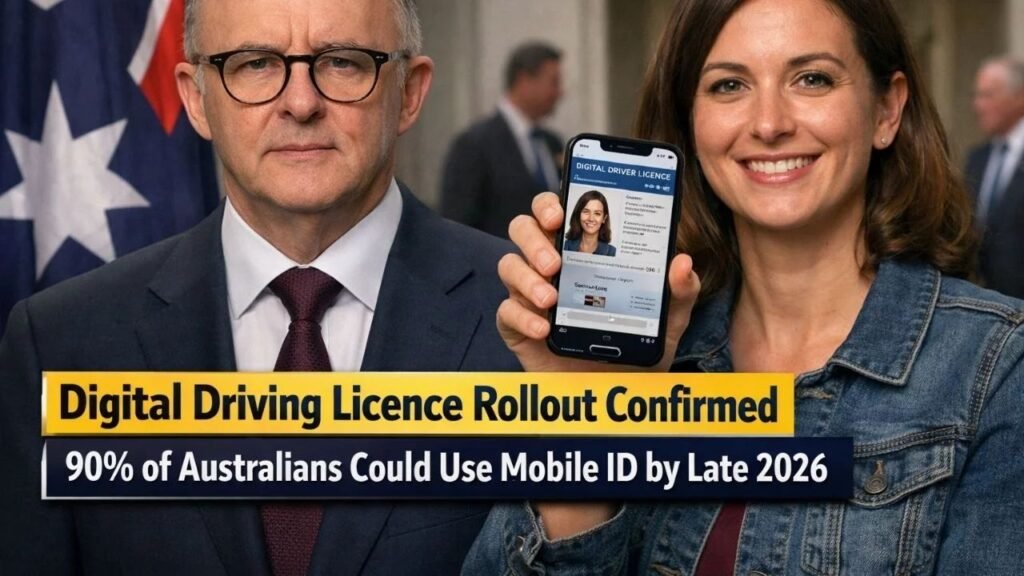
Australia is moving rapidly toward a more digital future, and identification systems are evolving alongside it. One of the most significant developments in recent years is the expansion of digital driver licences, allowing individuals to store their official identification securely on their smartphones.
By late 2026, government projections suggest that up to 90% of Australians could have access to a digital driver licence or mobile identification system. This shift represents a major milestone in digital transformation, reshaping how identity is verified in everyday life — from roadside checks to retail transactions.

As digital identification becomes more widely accepted, understanding how these licences work and what they mean for daily life is increasingly important.
What Is a Digital Driver Licence?
A digital driver licence is an official electronic version of a traditional physical licence. Instead of carrying a plastic card, users can access their licence through a secure government-approved mobile application.
These licences contain the same information as physical cards, including:
- Full name
- Date of birth
- Licence number
- Licence type and status
- Photograph
- Expiry date

The digital format provides immediate access to identification whenever needed, without requiring physical documents.
Everyday Uses for Digital Licences
Digital driver licences are designed to function in many of the same situations as traditional licences.
Common uses include:
- Presenting identification during roadside checks
- Verifying age for purchases
- Confirming identity at venues
- Accessing government-related services
- Providing identification during administrative processes

These capabilities make mobile identification a practical tool for modern lifestyles.
Why Governments Are Introducing Mobile Identification
The move toward digital identification reflects broader trends in technology and service delivery. Governments are adopting digital licences to improve both security and convenience for citizens.
Enhanced Security Features
Digital licences incorporate advanced security systems that are difficult to replicate using traditional methods.
Key security features often include:
- Encrypted data storage
- Multi-factor authentication
- Biometric access such as fingerprint or facial recognition
- Real-time verification technology
These protections help reduce the risk of identity fraud and unauthorised use.
Instant Updates and Accuracy
One of the advantages of digital licences is the ability to update information instantly.
For example:
- Address changes can be updated immediately
- Licence renewals can reflect instantly
- Suspensions or restrictions appear in real time
This reduces reliance on replacement cards and ensures information remains accurate.
Convenience for Modern Users
Mobile devices are already used for banking, payments, and communication. Adding identification to smartphones aligns with existing digital habits.
For many users, this means:
- Less need to carry physical wallets
- Faster identity verification
- Simplified administrative tasks
Convenience remains one of the strongest drivers behind adoption.
States Leading the Digital Licence Transition
Several regions have already introduced digital licences, while others are expanding access.
Early adopters have helped demonstrate how digital systems function in real-world settings, leading to increased public confidence.
Gradual Nationwide Expansion
The rollout strategy typically involves:
- Pilot programs in selected regions
- Gradual expansion to broader populations
- Continuous testing and system improvements
- Integration with other government services
This staged approach allows authorities to refine security measures and ensure reliability before full-scale implementation.
Digital vs Physical Licences: Key Differences
While digital licences offer modern functionality, physical cards remain widely recognised. Both formats serve similar purposes but differ in convenience and flexibility.
Format and Accessibility
Physical licences exist as plastic cards that must be carried at all times. Digital licences, however, are stored within secure applications on smartphones.
This allows users to access identification instantly without searching through wallets or bags.
Updates and Renewals
Updating a physical licence typically requires ordering a replacement card. Digital licences can update automatically once changes are processed within official systems.
This reduces delays and eliminates mailing times.
Security Advantages
Digital identification incorporates encryption technologies that provide additional layers of protection beyond standard physical cards.
However, physical licences still offer reliability when mobile devices are unavailable.
For this reason, many users choose to keep both options available.
Privacy and Data Security Considerations
Despite the advantages of digital licences, privacy remains an important concern for many users.
Protecting sensitive personal information is essential in any digital system.
How Data Is Protected
Modern digital licence platforms typically use multiple security layers to protect user information.
These may include:
- Secure encrypted storage
- Device-based authentication
- Controlled data-sharing permissions
- Limited data exposure during verification
For example, when verifying age, only relevant information may be displayed rather than full personal details.
User Control Over Information
Digital licence systems often allow users to control what information is shared during verification processes.
This level of flexibility enhances privacy and reduces unnecessary data exposure.
While no digital system is completely risk-free, ongoing security upgrades aim to minimise potential vulnerabilities.
What Happens If Your Phone Is Unavailable?
One of the most common concerns about digital licences is what happens if a mobile device cannot be used.
Situations such as battery failure, technical malfunction, or device loss can create challenges.
Backup Options Still Exist
Physical licences remain available and widely accepted.
Many users choose to:
- Keep a physical licence as a backup
- Carry alternative identification
- Maintain emergency battery solutions
These precautions ensure continued access to identification when digital options are unavailable.
Expanding Beyond Driver Licences
Digital driver licences are only the beginning of a broader transformation in identity systems.
Governments worldwide are exploring ways to digitise additional forms of identification.
Potential Future Digital Documents
Possible future developments may include:
- Digital proof-of-age cards
- Digital health identification
- Secure travel credentials
- Integrated government service access
These innovations could create unified digital identity platforms, simplifying everyday interactions.
Benefits for Businesses and Public Services
Digital licences offer advantages not only for individuals but also for organisations that rely on identity verification.
Faster Verification Processes
Businesses can verify identification quickly using digital scanning tools, reducing waiting times and improving customer service efficiency.
This is particularly useful in:
- Retail environments
- Hospitality venues
- Event entry systems
- Administrative offices
Faster verification enhances operational efficiency across multiple industries.
Reduced Fraud Risks
Advanced verification technologies help businesses identify fraudulent identification more easily.
This improves regulatory compliance and enhances consumer trust.
Preparing for Digital Identification Adoption
As digital licences become more widespread, individuals can take simple steps to prepare for the transition.
Ensure Device Compatibility
Most modern smartphones support official digital licence applications.
Users should verify that their device meets system requirements before installing the app.
Keep Software Updated
Regular updates improve security and ensure compatibility with evolving systems.
Keeping devices updated reduces the risk of technical issues.
Maintain Backup Identification
Although digital licences are convenient, maintaining alternative identification remains a practical safety measure.
Balancing digital and physical options offers the greatest flexibility.
The Future of Identity in a Digital World
Digital identification represents a significant shift in how individuals interact with government services and everyday institutions.
As mobile technology continues to evolve, digital identity systems are expected to become more sophisticated and widely adopted.
For many people, carrying identification on a smartphone will soon feel as natural as using mobile payments or online banking.
Final Thoughts: A Major Step Toward Digital Convenience
The expansion of digital driver licences marks a turning point in modern identification systems. With projections suggesting that up to 90% of Australians could have access to mobile ID by late 2026, digital identification is quickly becoming part of daily life.
While privacy and security remain important considerations, the benefits of convenience, efficiency, and improved protection are driving widespread adoption.
As digital identity systems continue to expand, individuals who understand how they work — and how to use them safely — will be well positioned to take advantage of this new era of secure, accessible identification.