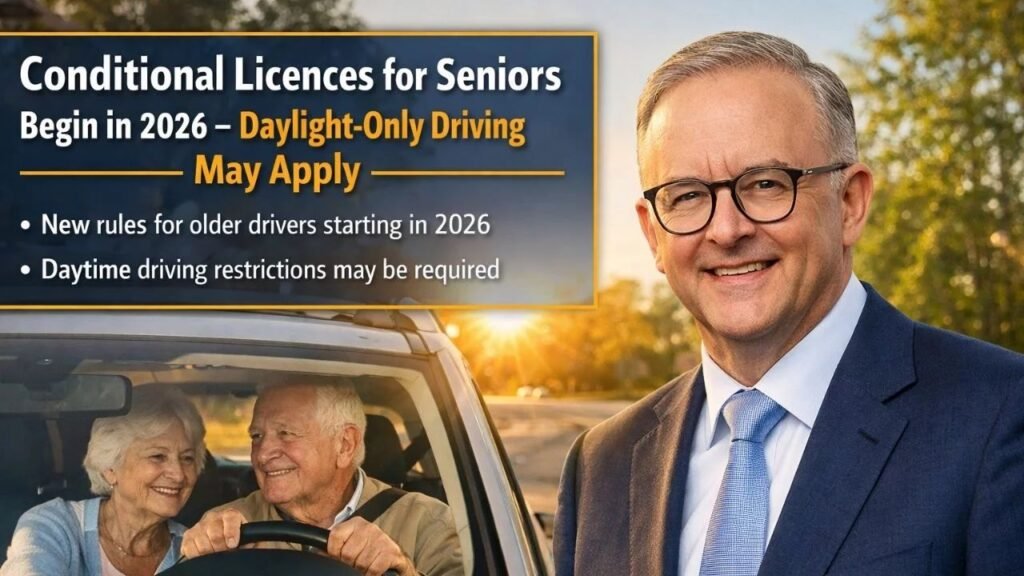
From 2026, Australia will see a notable shift in how senior drivers maintain their licences. Conditional licences, previously rare, are now becoming a common tool to balance road safety with continued mobility. These licences allow older drivers to retain their independence while introducing targeted restrictions, such as daylight-only driving, local area limits, or mandatory corrective lenses.
Brisbane resident Alan Foster, 76, shared his experience:
“At first, I felt singled out. But my eyesight isn’t what it used to be. I understand why.”

What Is a Conditional Licence?
A conditional licence permits driving under specific restrictions aimed at reducing risk. Common conditions include:
- Daylight-only driving
- No freeway or highway travel
- Limitation to a defined radius from home
- Mandatory use of corrective lenses
- Specific vehicle requirements
- Periodic medical reviews
The goal is to preserve mobility for seniors while accommodating medical or functional limitations. A state transport spokesperson noted:
“Conditional licences balance safety and independence. They are not punitive — they are protective.”

Why Are Conditional Licences Expanding in 2026?
Several factors contribute to the rise of conditional licences:
Ageing Population
Australians are living longer and continuing to drive well into their 70s and 80s. Extended driving years make tailored oversight increasingly relevant.
Road Safety Data
Medical conditions and reduced night-time visibility elevate crash risks. Conditional licences address these specific risks without removing driving privileges entirely.
Improved Medical Oversight
Structured assessments now allow officials to tailor restrictions, avoiding blanket licence cancellations. Road safety expert Dr. Melissa Grant explains:
“Daylight-only restrictions can significantly reduce risk for drivers with declining night vision, without removing their ability to drive entirely.”
Who Might Receive a Conditional Licence?
Conditional licences are issued case-by-case, typically when:
- A medical assessment highlights limitations
- Vision tests indicate night driving risks
- Reaction times are slower
- Neurological or physical conditions are present
Not all drivers over a specific age will automatically receive restrictions; assessments determine eligibility.
Daylight-Only Driving Explained
One of the most common restrictions is daylight-only driving. This generally entails:
- No driving between sunset and sunrise
- No driving in low-light or adverse weather conditions
- Possible seasonal adjustments to permitted hours
Night-time driving poses higher crash risk due to reduced visibility and glare sensitivity. For many seniors, avoiding night driving is already a personal choice.
Comparison: Full Licence vs Conditional Licence
| Category | Full Licence | Conditional Licence |
|---|---|---|
| Driving Hours | Any time | Restricted (e.g., daylight only) |
| Area Limits | None | May apply |
| Medical Review | Standard | More frequent |
| Vehicle Type | Any permitted class | May be limited |
Real Impact on Seniors
For seniors like Alan Foster, conditional licences allow continued mobility:
“I do my shopping and appointments during the day anyway. It’s better than losing my licence altogether.”
In rural regions, however, restrictions may pose challenges if essential services require travel outside permitted hours.
Consequences of Breaching Conditions
Failing to comply with licence conditions can lead to:
- Fines or penalties
- Demerit points
- Licence suspension
- Insurance complications
Strict adherence is crucial, as law enforcement and insurance providers monitor compliance.
How Conditional Licences Are Issued
The process typically involves:
- Medical assessment by a GP or specialist
- Submission of a medical report to the road authority
- Review by licensing officials
- Issuance of a full, conditional, or refused licence
Appeals are generally available if drivers disagree with decisions.
Nationwide Variations
Licensing remains state-based. While conditional licences are expanding nationally, differences exist in:
- Medical reporting standards
- Renewal age thresholds
- Review processes
Drivers should consult their state or territory road authority for specific requirements.
Insurance and Legal Considerations
Insurance policies require drivers to:
- Hold a valid licence
- Comply with all licence conditions
Non-compliance may affect claims after accidents. Full disclosure of medical conditions is critical.
Preparing for Conditional Licences
Seniors approaching renewal should:
- Book medical assessments early
- Discuss vision or health concerns openly
- Consider voluntary driving refresher courses
- Plan alternative transport for restricted hours
- Review licence conditions carefully upon renewal
Proactive preparation helps prevent unexpected limitations or interruptions.
Are Conditional Licences a Step Toward Licence Removal?
Authorities emphasise that conditional licences aim to avoid unnecessary cancellations. By tailoring restrictions to individual medical or functional limitations, older drivers retain independence while mitigating risk. Transport policy adviser James Howard notes:
“Ageing is not uniform. Some drivers need minor adjustments, not full removal.”
Frequently Asked Questions
- When do conditional licence changes begin? 2026, aligned with renewal updates
- Do all seniors get restrictions? Only if medical assessment indicates a need
- What is daylight-only driving? Driving is permitted only during daylight hours
- Can conditions be appealed? Yes, most states offer review processes
- Are restrictions permanent? Some are reviewed periodically
- Will annual medical checks be required? Often yes, depending on age and condition
- What if restrictions are ignored? Fines, licence suspension, and insurance issues may follow
- Are rural drivers treated differently? Generally no, but practical impact may be greater
- Can conditional licences permit highway driving? Only if no restriction applies
- Does wearing glasses count as a condition? Yes, corrective lens requirements are common
Conclusion
Conditional licences in 2026 are transforming senior driving across Australia. Restrictions like daylight-only driving are designed to protect older drivers and the wider community without unnecessarily curtailing independence. With proactive planning, medical assessments, and compliance, seniors can continue to drive safely while maintaining mobility and quality of life well into their later years.