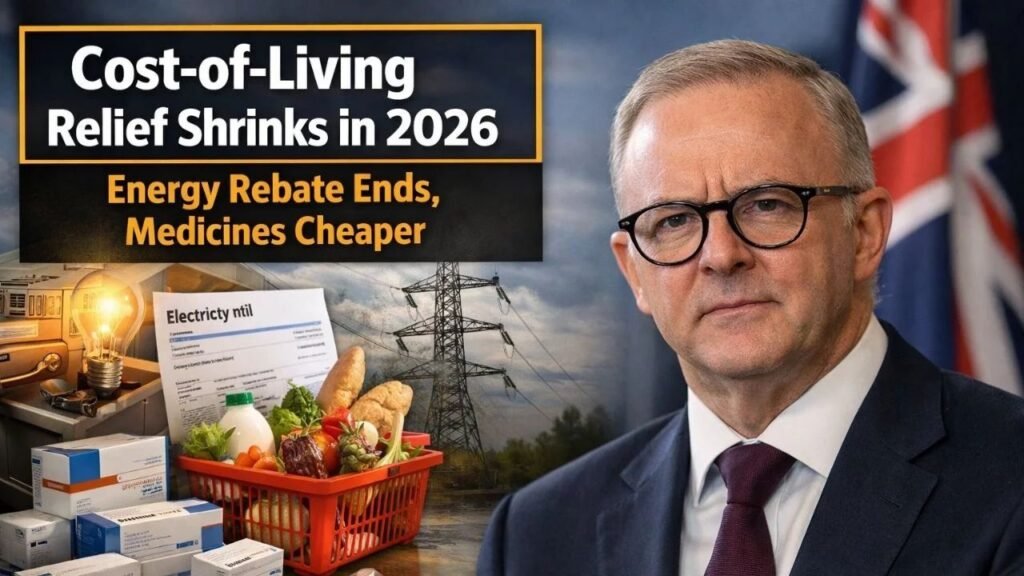
In 2026, Australians are experiencing a noticeable shift in cost-of-living support. Federal energy rebates that once eased quarterly electricity bills have ended, while prescription medicine costs under the Pharmaceutical Benefits Scheme (PBS) have been reduced for eligible concession holders. For households already managing tight budgets, this represents a reshuffling of relief — some support is winding down, while other measures continue to offer savings.
Sydney pensioner Robert Hayes shared his experience:
“At first I thought it was a mistake. Then I realised the rebate had ended.”
Federal Energy Rebate Program Concludes
The temporary federal energy rebate, introduced during periods of high electricity prices and inflation, provided quarterly credits to eligible households. In 2026, the program has ended for most recipients.
Key points include:
- Federal credits no longer appear on energy bills
- State-based concessions and pensioner rebates continue
- Utility hardship programs remain available
- The rebate was always intended as short-term relief, not a permanent subsidy

A government spokesperson emphasized:
“The energy rebate delivered targeted support during a period of exceptional price volatility. It was structured as a temporary measure.”
Implications for Household Budgets
Without the federal rebate, many households may experience:
- Higher electricity costs during peak seasons
- Increased pressure on household budgets
- Greater reliance on state concessions or hardship programs

For pensioners and low-income families, this could translate to several hundred dollars in additional energy expenses each year, depending on usage and regional pricing.
Medicine Costs Decline Under the PBS
While energy relief has ended, medicine affordability has improved for concession card holders. Updates to the PBS include:
- Reduced maximum co-payments for eligible prescriptions
- Faster access to the PBS Safety Net threshold
- Continuation of co-payment freezes in certain categories
Health economist Dr. Laura Bennett explains:
“Reducing medicine co-payments provides ongoing relief, particularly for seniors managing chronic conditions.”
Comparison: Energy Relief vs Medicine Savings
| Category | 2025 Support | 2026 Situation |
|---|---|---|
| Federal Energy Rebate | Active quarterly credit | Ended |
| State Energy Rebates | Available | Continue |
| PBS Medicine Co-Pay | Higher | Reduced for concession holders |
| Net Impact | Energy relief dominant | Healthcare relief more prominent |
While reduced medicine costs partially offset the loss of the federal rebate, households with high energy consumption may still see a net increase in annual expenses.
Real-World Impact
Robert Hayes, who manages diabetes and heart medication, notes:
“My medicines are cheaper now. But electricity is up without the rebate.”
For seniors or families with multiple prescriptions, annual PBS savings may total $200–$400. Conversely, high electricity users may face larger net increases in their cost-of-living.
Why the Shift Occurred
The federal energy rebate was introduced during volatile wholesale electricity markets and periods of high inflation. By 2026:
- Energy markets have stabilized
- Inflation pressures have eased
- Policy focus has shifted toward structural healthcare affordability
Officials argue that permanent, sustainable measures — such as reduced PBS co-payments — provide longer-term relief for households.
Who Is Most Affected?
The end of the federal energy rebate primarily impacts:
- Pensioners
- Low-income households
- Families with high electricity usage
- Renters in less energy-efficient homes
Meanwhile, reduced PBS costs mainly benefit:
- Pensioner Concession Card holders
- Disability Support Pension recipients
- Carer Payment recipients
- Commonwealth Seniors Health Card holders
What Support Remains in 2026
Despite the rebate ending, households can still access:
- State-based energy concessions
- Utility hardship programs and payment plans
- Pensioner rebates
- Solar incentives where available
- Healthcare support through PBS and Medicare
Steps Households Should Take
Australians can mitigate the impact by:
- Reviewing electricity usage and comparing plans
- Confirming eligibility for state-based rebates
- Ensuring PBS concession pricing is applied
- Tracking progress toward the PBS Safety Net
- Considering energy efficiency upgrades
Proactive management can reduce financial strain as relief programs shift.
Future Cost-of-Living Support
While no new nationwide energy rebate has been announced for 2026, targeted relief measures could be reintroduced if energy prices spike. Healthcare affordability continues to be a central policy focus, particularly for seniors and vulnerable populations.
Frequently Asked Questions (Q&A)
- Has the federal energy rebate ended? Yes, it concluded in 2026.
- Will electricity bills increase? Possibly, depending on usage and state rebates.
- Are state energy rebates still available? Yes, in many jurisdictions.
- Have medicine prices dropped? Yes, PBS co-payments for concession holders are lower.
- How much can I save on prescriptions? Potentially $200–$400 annually.
- Does this affect renters? Yes, especially in less energy-efficient homes.
- Is the PBS change permanent? Current reductions are part of ongoing affordability reforms.
- Can I access hardship programs? Yes, energy retailers provide support plans.
- Do all pensioners benefit from cheaper medicines? Yes, if they hold eligible concession cards.
- Was the energy rebate permanent? No, it was always temporary.
Conclusion
In 2026, Australia’s cost-of-living relief is evolving. While federal energy rebates have ended, reduced PBS medicine costs offer meaningful savings for pensioners and concession card holders. Households must now adjust budgets to navigate the loss of one form of support while continuing to benefit from another, ensuring financial stability in a changing economic landscape.