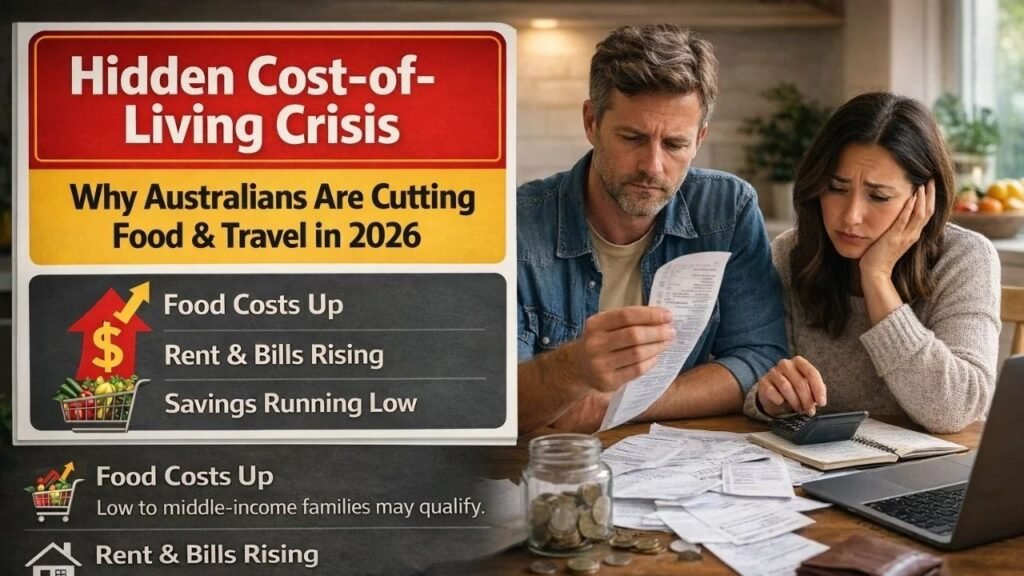
In 2026, many Australian households are quietly adjusting their lifestyles in response to a hidden cost-of-living crisis. While official inflation figures suggest moderate increases, the reality for families across the country tells a different story. Rising costs in essential areas—food, housing, energy, and healthcare—are forcing Australians to make tough choices.
What’s Driving the Crisis
The current cost-of-living pressures are concentrated in essentials, making them particularly hard to manage. Key factors include:
- Rising grocery prices – Supply chain costs and production expenses are pushing supermarket bills higher.
- Housing and rent increases – Limited housing supply and demand-driven prices are inflating rental and mortgage costs.
- Energy and electricity bills – Rising electricity prices and the end of previous rebates are adding to household expenses.
- Healthcare costs – Out-of-pocket expenses for prescriptions, specialist visits, and treatments are increasing.
- Reduced government relief measures – Temporary supports that helped during previous cost spikes have ended, leaving households to adjust independently.

These pressures disproportionately affect essential spending, leaving little room for discretionary purchases.
The Silent Shift in Spending
Australians are altering daily habits to cope with rising costs. Some of the most notable changes include:
- Food: Switching to cheaper brands, reducing portion sizes, and eliminating non-essential items
- Travel: Cancelling holidays, reducing weekend trips, and avoiding fuel costs
- Lifestyle adjustments: Less dining out, fewer entertainment expenses, and delaying major purchases
This shift is occurring quietly but is widespread, reflecting a collective effort to manage finances amid growing economic pressure.
Real Stories Behind the Struggle

For Perth resident Sarah Collins, adapting has become a necessity. “We’ve stopped eating out completely. Even groceries—we’re buying less and choosing cheaper options,” she says.
Brisbane father Daniel Hughes shares a similar experience: “We used to visit family more often, but now it’s too expensive. Travel just isn’t feasible.”
These stories underscore a broader national trend where households are prioritising essentials and cutting back on non-critical spending.
Why Essentials Are Rising Faster

Experts point out that inflation is not uniform—essential goods are increasing faster than headline figures suggest. Primary drivers include:
- Food supply costs: Rising production, transport, and packaging expenses
- Housing demand: High demand and limited supply pushing rental and purchase prices higher
- Energy prices: Electricity and gas rates rising, with rebates ending
- Healthcare expenses: Increased out-of-pocket costs for medications and services
These categories represent the largest portion of household budgets, making the impact particularly acute for lower- and middle-income families.
Government Perspective
Government officials acknowledge the pressure on households and are implementing targeted support measures. However, for many families, these interventions only partially offset the rising costs. Officials stress the importance of financial planning, budgeting, and awareness to navigate ongoing changes.
Expert Analysis and Insights
Economists highlight that the hidden cost-of-living crisis is more severe than headline inflation suggests. Key insights include:
- Essential goods inflation exceeds overall inflation rates
- Low- and middle-income households face the greatest strain
- Consumer spending behaviour is shifting, with reductions in non-essential areas
Dr. Laura Bennett, an economist, explains, “When essentials become more expensive, households are forced to cut back on everything else, from dining out to travel, which affects quality of life and economic activity.”
Who Is Most Affected
The groups most impacted by rising costs include:
- Low- and middle-income families – Spending a higher proportion of income on essentials
- Pensioners and retirees – Fixed incomes make adjustments difficult
- Renters – Facing high rental costs alongside other essential expenses
- Single-income households – Limited flexibility to absorb rising costs
These households are making real sacrifices, from lifestyle choices to essential needs.
The Psychological Impact
Beyond financial stress, the crisis has social and emotional consequences:
- Increased anxiety and stress
- Reduced quality of life
- Less engagement in social and leisure activities
This makes the cost-of-living crisis both an economic and social concern.
Practical Steps to Manage Rising Costs
Households can take proactive measures to reduce financial strain:
- Review your spending – Track expenses and identify areas to cut back
- Plan groceries carefully – Buy in bulk, use discounts, and minimise waste
- Cut unnecessary costs – Limit discretionary spending and defer non-essential purchases
- Check government support – Ensure all eligible benefits and subsidies are claimed
- Adjust your budget – Prepare for ongoing increases in essential costs
Awareness and early action are key to maintaining financial stability.
Common Mistakes to Avoid
Many households struggle due to:
- Failing to track daily spending
- Ignoring small but cumulative price increases
- Delaying adjustments to the household budget
- Over-relying on savings to cover recurring expenses
Avoiding these pitfalls helps families stay ahead of financial pressures.
Why This Matters in 2026
The hidden cost-of-living crisis illustrates that:
- Rising essential costs are affecting households nationwide
- Lifestyle adjustments are becoming necessary for financial resilience
- Early planning and proactive budgeting are critical to maintaining wellbeing
Understanding the nature of these pressures enables Australians to make informed choices and protect household stability.
Conclusion
The 2026 cost-of-living landscape is challenging, with essentials such as food, housing, energy, and healthcare increasing at a pace that outstrips average inflation. Australians are quietly adjusting their spending habits, cutting back on dining, travel, and discretionary purchases. By monitoring expenses, planning effectively, and utilising available support, households can mitigate the impact of this hidden crisis while maintaining financial resilience and wellbeing.