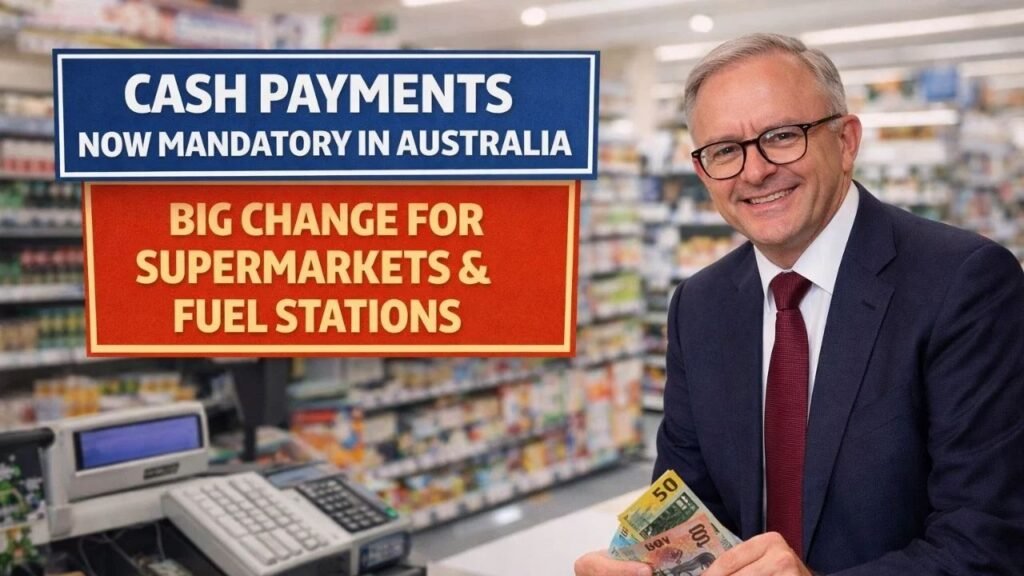
In a major policy shift reversing years of trend toward a cashless society, Australia is introducing a rule in 2026 that requires businesses selling essential goods to accept cash payments. The move aims to ensure financial inclusivity and safeguard consumer choice as digital payments dominate daily transactions.
Why Cash Acceptance Is Back on the Agenda
For decades, Australians have increasingly relied on digital payments, with cards and mobile wallets becoming the norm. While convenient, this shift has raised concerns over financial exclusion, particularly for seniors, low-income households, and those living in regional areas with limited access to banking infrastructure.

Under the new regulation, businesses like supermarkets, fuel stations, and pharmacies must accept cash for essential purchases. This includes transactions typically under $500, ensuring everyday necessities remain accessible to all Australians. While digital payments continue to be allowed, cash cannot be refused for these critical items.
Who Benefits From the Rule
The reintroduction of mandatory cash acceptance primarily supports two groups:
- Seniors – Older Australians, like 69-year-old retiree Margaret Ellis from regional Victoria, have expressed relief. “Some places wouldn’t take cash anymore. Now I don’t have to worry about being turned away,” she said.
- Vulnerable or low-income consumers – Individuals without easy access to banking or digital platforms can now purchase essential goods without barriers.
Economists note that cash remains a vital backup in the financial ecosystem. Dr. Laura Bennett explains, “Cash provides a backup system and supports vulnerable groups while maintaining resilience in payment systems.”
What Businesses Need to Know

Affected businesses must adapt quickly to comply with the new rule. Key requirements include:
- Accept cash for eligible transactions
- Train staff on proper cash handling and compliance
- Maintain operational systems for cash management
- Clearly communicate payment options to customers
Businesses failing to comply could face penalties once enforcement is fully implemented. However, authorities stress that the rule applies specifically to essentials; non-essential transactions can still be card-only if needed.
Impact on Daily Shopping
For consumers, the policy change brings tangible benefits:
- Guaranteed service for cash users – No one can be refused service when paying in cash for essentials.
- Enhanced payment flexibility – Shoppers can choose between cash and digital payments without limitation.
- Peace of mind – Cash provides security during potential digital outages or technical failures.

Supermarket staff in urban areas report that the adjustment is manageable. Daniel Kim, a Sydney-based employee, shares, “Most people still use cards, but we’re ready to accept cash again.”
Why the Government Introduced This Policy
The government frames the rule as a matter of inclusion and choice. Officials cite several reasons for reintroducing mandatory cash acceptance:
- Rising number of cashless-only businesses
- Financial exclusion risks for seniors and low-income groups
- Dependence on digital payment systems with potential technical failures
- Privacy concerns associated with digital transactions
By ensuring cash is always an option, policymakers aim to balance technological innovation with financial accessibility.
Common Misconceptions About the Rule
With changes of this scale, confusion is inevitable. Here’s what the rule does—and doesn’t—do:
- ❌ “All purchases must be cash-accepted” – False. Only essentials under the $500 threshold are affected.
- ❌ “Cash will replace digital payments” – False. Digital payments remain fully available.
- ✔ “Cash must be accepted for essentials” – True. This is the core requirement of the policy.
Practical Tips for Consumers and Businesses
For Consumers:
- Keep a reasonable amount of cash on hand for essential purchases
- Know your rights regarding cash acceptance
- Confirm payment options before shopping, especially at smaller outlets
For Business Owners:
- Update payment systems to handle cash efficiently
- Train staff to comply with the new policy
- Communicate clearly to customers which transactions allow cash
- Stay informed about enforcement details and penalties
The Bigger Picture: Cash in a Digital Age
Even as Australia embraces digital convenience, this policy underscores the continuing relevance of cash. By protecting cash as a payment method, the government is addressing both social equity and financial system resilience. Analysts suggest that while cash usage is declining overall, ensuring its availability remains crucial for maintaining consumer confidence and accessibility.
Conclusion
Australia’s 2026 cash payment mandate marks a significant step in balancing innovation with inclusivity. For shoppers, it restores flexibility and choice, while for businesses, it introduces new compliance responsibilities. As the policy rolls out nationwide, carrying cash for essentials will become a practical necessity, ensuring that no Australian is left behind in a digital-first world.
The change highlights a simple truth: even in an increasingly digital economy, cash continues to matter—both as a safety net and as a symbol of accessibility for all.